


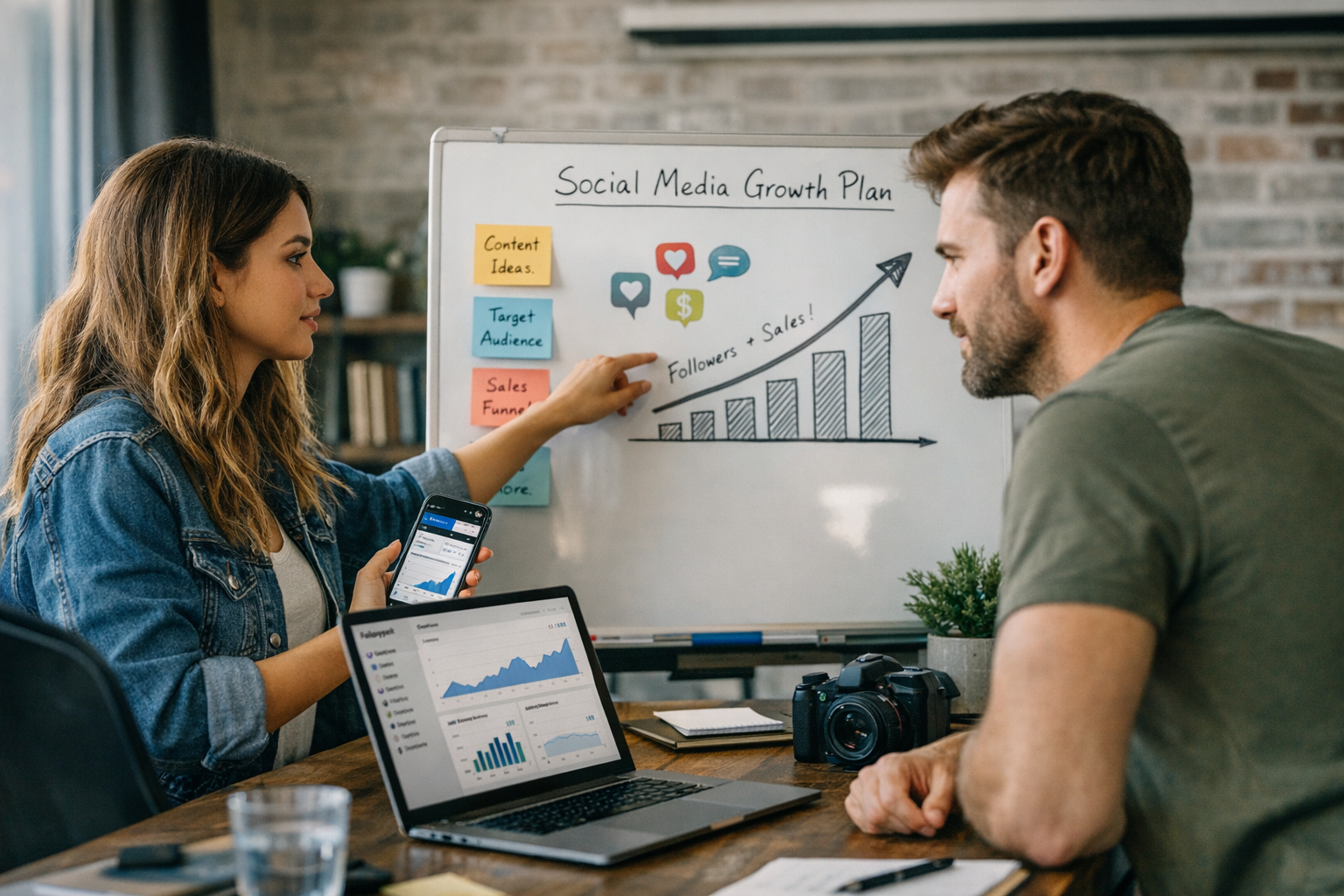
Picture this: you’ve got a killer product or service, but your social media accounts are flatlining. Engagement is low, growth is stalled, and those “DM for collabs” bots feel more active than your actual followers. It’s frustrating, right? But here’s the thing—social media isn’t just about vanity metrics or going viral once. If done right, it can be one of the most effective channels to drive real sales.
So how do you build a social media growth plan that doesn’t just look good on paper but actually converts? It’s not about throwing spaghetti at the wall (or hashtags at posts) and hoping something sticks. Let’s break down what works in 2026—and what doesn’t.


—
Start With Sales Goals, Not Follower Goals
Let’s kill this myth upfront: more followers don’t automatically mean more sales. Chasing follower counts without tying them to revenue goals is like filling up a balloon with no intention of flying it anywhere.
Instead, reverse-engineer your strategy. Ask yourself:
- How much revenue do I want from social media in the next quarter?
- What percentage of my current sales comes from social channels?
- Which platforms drive the best conversions for my target audience?
For example, if you’re aiming for $50K in quarterly revenue and Instagram drives 20% of your website traffic with a 3% conversion rate, then you can map out how many visitors—and ultimately how much engagement—you need to hit that target.
Pro Tip: Use tools like Google Analytics and native platform insights to track where your paying customers are coming from. Don’t guess; use hard data.
—
Nail Your Audience Segmentation
A lot of brands think they know their audience because they’ve filled out some generic persona template. Nope—not enough anymore! In 2026, audience behavior shifts fast thanks to trends driven by AI algorithms (hello, TikTok For You page). You need real-time insights into what your audience wants.
Start by diving into:
1. Demographics: Age ranges, locations, languages.
2. Psychographics: Interests, values, motivations.
3. Behaviors: What kind of content do they engage with? What time are they online?
Comparativa: estrategias de repurposing de contenido para blogs vs podcasts: guí
For example:
- On Instagram Stories: Short polls or quizzes work wonders with Gen Z audiences who love interaction.
- On LinkedIn: Long-form thought leadership posts resonate better with senior professionals looking for value-driven content.
If you’re not sure where to start? Use affordable tools like ViralMaker Mixed or Audience Insights platforms inside ad managers to gather fresh data on your followers’ habits.
—
Content Is Still King—But Context Is Queen
Posting generic content in 2026 won’t cut it anymore—AI has flooded every platform with templated stuff that looks polished but lacks originality. If you want results (and trust), focus on two things: originality and relevance.
Here’s how:
- Content Pillars: Stick to 3–5 core themes tied directly to your brand message or product benefits.
- Example: A fitness app might focus on user testimonials (“Before & Afters”), educational tips (“How To Meal Prep”), and challenges (“7-Day Workout Challenges”).
- Formats That Sell: Video is still outperforming static images across all platforms—but short-form dominates (think Reels under 60 seconds). Mix in carousels for step-by-step tips or behind-the-scenes shots for authenticity.
What’s working right now:
- User-generated content (UGC): People trust other people more than brands.
- Interactive polls and quizzes: Higher engagement = higher algorithmic reach.
And don’t forget calls-to-action! Every post should nudge users toward something specific—visiting your site, signing up for an email list, downloading an app…you get the idea.
—
Case Study: A ViralMaker Workflow Example
ViralMaker has been our go-to tool when scaling up campaigns quickly without burning out on manual processes. Here’s how we used it last month:
1. Research Phase
We input trending topics sourced from competitors’ high-performing hashtags into ViralMaker’s AI engine. Within minutes, we had three detailed article drafts tailored for different audiences—educational posts targeting beginners vs expert-level guides aimed at pros.
2. Content Generation
10 Herramientas Clave para Crear Contenido Viral en Redes Sociales en 2024: guía
ViralMaker autopiloted captions optimized for SEO while ensuring everything matched brand tone guidelines—a lifesaver when planning across platforms like Instagram and LinkedIn simultaneously!
3. Multichannel Publishing
The integrated WordPress publishing workflow meant we could repurpose long-form blog excerpts directly into carousel graphics using pre-designed templates synced via Canva Pro connectors inside ViralMaker Mixed Mode features… talk about efficiency!
Got curious? Learn more.
—
Paid Ads vs Organic Growth: What Should You Focus On?
Here’s where most people panic—they assume they need massive ad budgets to make an impact on social media today because organic reach feels dead on some platforms (cough Facebook). But honestly? It comes down to balance.
Organic Pros:
- Builds authentic relationships over time.
- Costs nothing except effort/time (or hiring someone savvy).
Organic Cons:
- Can be painfully slow if you’re starting from scratch.
Paid Ads Pros:
- Immediate visibility among targeted audiences who aren’t following yet.
Paid Ads Cons:
- Requires constant budget allocation—and mistakes add up fast if campaigns aren’t optimized correctly!
Which one should YOU choose? Truthfully—it depends entirely upon timing + goals + resources available now rather than “later.” Not sure which gives faster ROI though?? Test both paths effectively before over-investing long-term commitments blindly elsewhere either way….explore smarter hybrid ideas/combo strategies further via this playbook.
—
Measure Success Beyond Likes
Metrics matter—but let me be blunt here… vanity metrics can totally mislead strategy decisions wrongly!!
Related Links



1 Comment
[…] learn more […]