




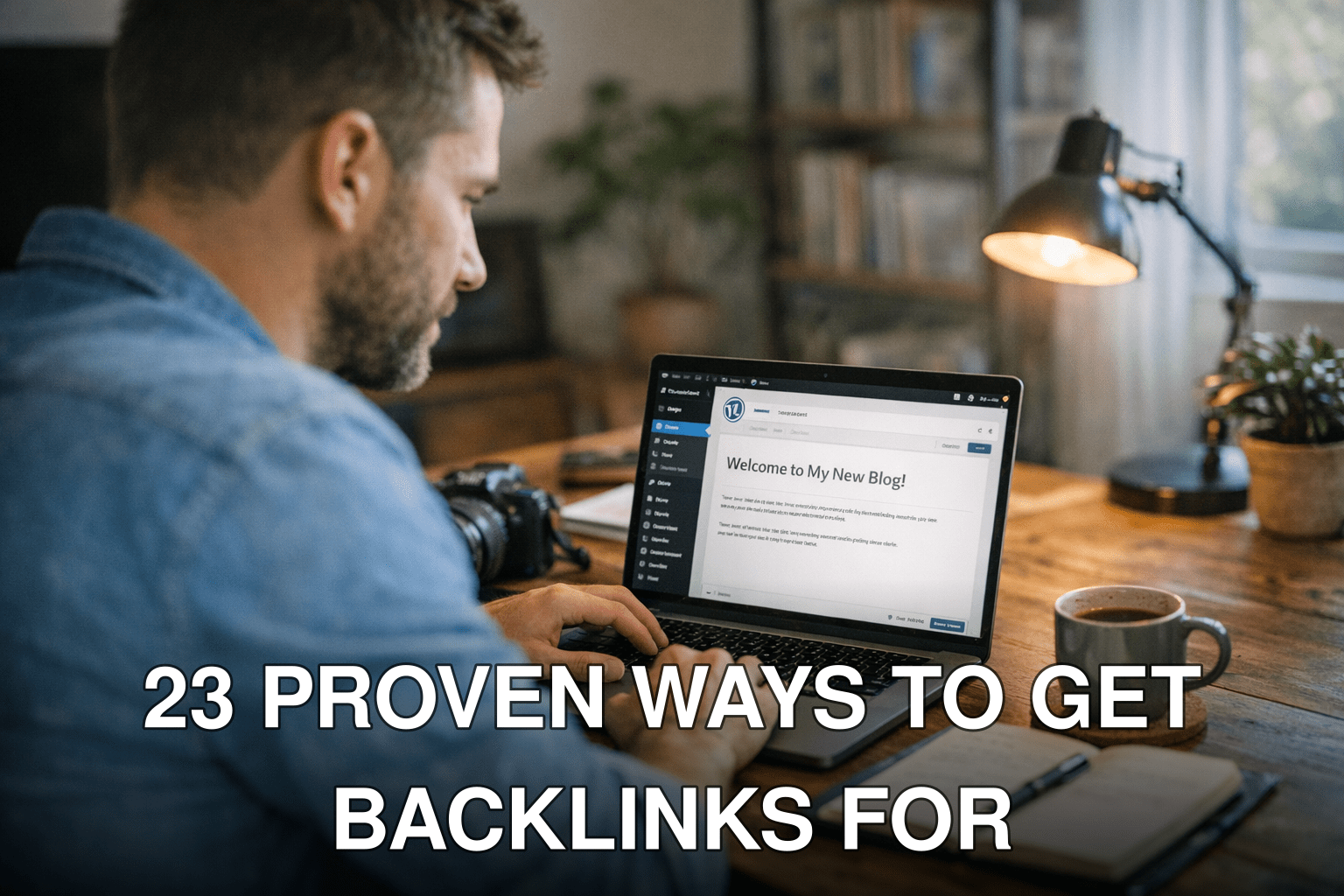
Picture this: You’ve just launched your shiny new WordPress blog. The content’s fantastic, the design is flawless, but there’s one glaring problem—no one is visiting. Why? Because without backlinks, your blog is like a store in the middle of the desert. No roads lead to it.
Backlinks are still critical in 2026 if you want to rank on Google and actually get eyeballs on your work. But here’s the thing: buying links is risky (and expensive), and chasing them can feel like screaming into the void. Yet, I promise you—getting high-quality backlinks doesn’t have to cost you a cent.
In this guide, we’ll dive into 23 proven ways to build backlinks for free that actually work today. No fluff, no shortcuts that’ll get you penalized by Google—just real strategies designed for new blogs like yours.
Quick Navigation
- 1–4: Easy foundational moves to start building links today
- 5–9: Content-driven methods that naturally attract links
- 10–14: Networking hacks to boost your outreach game
- 15–19: Leveraging platforms and tools effectively
- 20–23: Advanced techniques most beginners overlook
1. Start with Internal Linking (Yes, It Counts)
Before you even think about external links, make sure your own house is in order. Internal linking isn’t technically backlinking, but it’s a powerful way to improve SEO and guide search engines through your site.

Start by linking your new articles back to older ones and vice versa. For example, if you’re writing about “top keyword research tools,” link it naturally to an older post about “SEO basics.” This creates context for readers and search engines while keeping people on your site longer—a ranking signal Google loves.
Key takeaway: Internal links are low-hanging fruit that help both SEO and user experience.
2. Write Guest Posts That Don’t Suck
I know what you’re thinking: “Guest posting? Isn’t that dead?” Nope—it’s alive and well if done right in 2026. The trick is avoiding generic pitches nobody cares about.
Also worth reading: Comparativa
Focus on niche-relevant blogs where your insights will genuinely add value. When pitching a guest post idea, don’t make it all about yourself; explain why their audience will benefit from what you have to say—and back it up with tangible examples of value-packed ideas or previous posts you’ve written.
Pro tip: Avoid sites labeled as “guest post farms.” These usually do more harm than good because they’re flagged by search engines as spammy.
Key takeaway: Guest posting still works when done strategically—focus on quality over quantity.
3. Create Link-Worthy Infographics That Solve Problems
Infographics might sound old-school in 2026, but trust me—they still pull weight when done right. Why? Because they condense complex topics into visually appealing formats that are easy to share (and cite). Bloggers love embedding infographics because they enhance their content without extra effort on their part—and every time they do so, boom! There’s another backlink for you.
You don’t need fancy design skills either; free tools like Canva or Venngage offer templates anyone can use.
Example: Create an infographic showing “The Evolution of WordPress Plugins” or “10 Stats About Blogging in 2026 You Can’t Ignore.” Then share it with relevant bloggers who would find it useful for their audience.
Key takeaway: Infographics are evergreen link magnets—create something useful and watch the backlinks roll in.
4. List Your Blog in Niche Directories
Not all directories are spammy relics from the early days of SEO doomscrolling; some niche directories are still respected sources of traffic and backlinks in specific industries (think local business directories or topic-specific aggregators).
Related guide: 10 Herramientas Clave para Crear Contenido
For example: If your blog focuses on vegan recipes or tech tutorials, there are likely directories out there specifically for those niches where users actively look for curated resources.
Need proof? Learn more about how niche-specific keywords align perfectly with directory traffic-building tactics.
Key takeaway: Don’t sleep on niche directories—they’re free backlinks waiting for you!
5–9: The Power of Irresistible Content Marketing
Here comes the fun stuff—using content itself as bait for backlinks.

5. Publish Original Research or Data Insights
If there’s one thing people love linking out to, it’s unique stats or studies they can quote directly from credible sources like yours!
For instance: Analyze trends within your field using publicly available data—or conduct surveys through free tools like Google Forms—and publish actionable findings others haven’t covered yet online elsewhere organically leading back towards YOU organically getting cited .


1 Comment
[…] Or go deeper with this step-by-step manual: “23 Ways To Get Backlinks”. […]