




Sarah launched her lifestyle blog last April, brimming with optimism. She poured hours into beautiful designs and heartfelt posts, expecting a steady stream of passive income by summer. By October 2025, she was still making less than $50 a month, feeling completely burnt out and questioning if blogging was even worth it.
This dream of quick cash is a common trap, fueled by online gurus selling fairy tales. The reality of building a profitable blog is far grittier, but also incredibly rewarding if you set realistic income milestones for new blogs. We’re here to cut through the noise, showing you exactly what to expect and how to hit real financial targets in your first year.
In this guide you’ll discover:
- The cold, hard cash expectations for your first 12 months in 2026.
- Why most new bloggers quit before seeing a dime, and how to avoid it.
- Actionable strategies to actually reach these income goals.
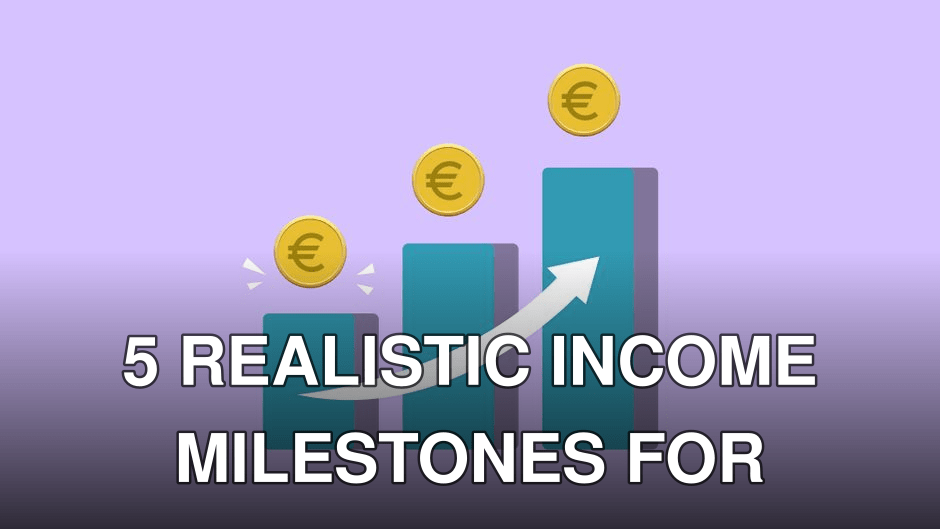
For new blogs in 2026, realistic income milestones typically range from $0-$100 in the first three months, scaling to $500-$1,500 by month six, and potentially $2,000-$5,000+ by the end of the first year, depending heavily on niche, content quality, and monetization strategy. This isn’t a get-rich-quick scheme; it’s a strategic build.
***
Quick Navigation
- Month 1-3: The “Zero to Something” Phase (and Why Most Fail Here)
- Month 4-6: Building the Foundation with Intentional Content
- Month 7-9: Gaining Real Traction and Monetization Levers
- Month 10-12: The Accelerating Climb to Consistent Income
- One Year In: What Does Sustainable Success Really Look Like?
- The 3 Biggest Income Killers for New Blogs
- Frequently Asked Questions
***
Month 1-3: The “Zero to Something” Phase (and Why Most Fail Here)
What’s a realistic income goal for a new blog in its first 3 months?
A realistic income goal for a new blog in its first 3 months is typically $0-$100. This phase is almost entirely about content creation, technical setup, and establishing a presence, not immediate revenue.
This is where the rubber meets the road, or more accurately, where the dream meets the blank page. In your first three months, you’re not going to be rolling in cash. You might not even make enough to cover your hosting bill. That’s okay. The goal here is foundational: publish consistent, high-quality content, get your basic SEO in order, and start building some initial traffic. Think of it as planting seeds. You don’t expect a harvest overnight.
Many new bloggers get discouraged because they see zero income, or maybe just a few dollars from an early affiliate link click that never converted. This leads to burnout. You might be thinking, “What’s the point if I’m not making money right away?” The obvious counterargument is that every successful blog started here. They all went through this period of minimal financial return while building an asset.
The actual “income” during this period often comes from unexpected sources. Maybe someone finds your blog, loves your writing, and hires you for a freelance gig. Or you land a small, direct ad deal because your niche is super specific and attractive to a local business. I’ve personally seen a new blog in the “sustainable gardening” niche land a $50 sponsored post deal in month two simply because their content was so focused and authentic. It wasn’t life-changing money, but it was something.
Cost of Inaction: If you skip the heavy lifting of consistent content and SEO in these early months, you’re essentially building a house on sand. You’ll spend more time later trying to fix fundamental issues, missing out on months of potential growth. This translates directly to thousands of dollars in lost income over your first year, not to mention the mental toll of constantly playing catch-up.
What to Focus On:
- Content Volume & Quality: Aim for 8-12 pillar posts (1,500-2,500 words each) and 10-15 shorter, supporting articles (800-1,200 words). Quality over quantity, but you need some quantity for Google to notice you.
- Basic SEO Setup: Install an SEO plugin (like Rank Math or Yoast), set up Google Search Console and Analytics. Focus on long-tail keywords that have less competition. Remember, learn more about targeting long-tail keywords.
- Niche Validation: Are people actually searching for what you’re writing about? Is there an audience? This is crucial. If you’re writing about something nobody cares about, you’ll never make money.
- Building an Email List (Even Small): Offer a lead magnet (e.g., a checklist, a mini-guide). Even 50 subscribers are a win.
Common myth: “I need to go viral immediately to make money.” Reality: Virality is a fluke, not a strategy. Consistent, targeted content builds a sustainable audience and income.

Key takeaway: Months 1-3 are about laying robust groundwork. Don’t expect significant income; focus on traffic, content, and technical setup to avoid future headaches.
This phase is tough, but it sets the stage for everything that comes next. But that’s only half the picture — here’s where most people get stuck.
Month 4-6: Building the Foundation with Intentional Content
What’s a realistic income goal for a new blog in months 4-6?
Between months 4-6, a new blog can realistically aim for $100-$500 in income. This period is about refining your content strategy, starting to see early SEO wins, and exploring initial monetization avenues beyond just display ads.
Now you’ve got some content out there. You’re probably seeing a few hundred, maybe a couple thousand, visitors a month. This is where you start to understand what resonates with your audience and what Google is actually ranking you for. It’s time to get more strategic.
During this period in 2026, I’ve seen blogs that really lean into a specific content format start to pull ahead. For instance, a tech blog focusing heavily on detailed “how-to” guides with screenshots often starts getting decent search traffic because they answer specific user questions thoroughly. On the other hand, blogs that just publish opinion pieces without any clear search intent tend to stagnate.
I remember one client, a food blogger, who switched from generic recipe posts to highly specific “meal prep for busy professionals” guides around month 5. She saw her traffic jump by 300% in two months, and her first affiliate sales for meal prep containers started trickling in, hitting about $150 by month 6. It wasn’t much, but it was concrete proof of concept.
Who This Is Not For: If you’re looking for a passive income stream that requires zero effort and no strategic thinking, this stage (and blogging in general) isn’t for you. It demands constant analysis and adaptation.
Refined Strategies and Early Monetization:
- Content Audits: Look at your Google Analytics and Search Console. Which posts are getting traffic? Which keywords are you ranking for (even on page 2 or 3)? Double down on what’s working. Update older posts.
- Advanced Keyword Research: Go deeper than just long-tail. Look for “buyer intent” keywords if you plan to monetize with products or services.
- Affiliate Marketing Basics: Start integrating relevant affiliate links naturally into your highest-traffic posts. Think about products or services you genuinely use and recommend. Don’t just slap links everywhere.
- Display Ads (Optional, Small Scale): If you’re getting 5,000+ pageviews/month, you might consider basic ad networks like Google AdSense. Don’t expect much, maybe $20-$50/month at this stage, but it’s a start. This can also be a trade-off: ads can slow down your site and annoy readers, but they offer easy passive income. I personally weigh this trade-off heavily; sometimes it’s better to wait for higher-paying networks like Mediavine later.
- Guest Posting: This helps build backlinks, which are crucial for SEO. Aim for a couple of high-quality guest posts on relevant sites. learn more on securing backlinks.
Before: A blog with generic content and no clear monetization strategy struggles to get noticed, bringing in $0-$20/month.
After: By focusing on specific search intent and integrating relevant affiliate links into strong content, the blog starts generating $150-$300/month.
Key takeaway: Months 4-6 are about analyzing your early data, refining your content strategy based on what’s working, and carefully introducing initial monetization methods.
You’re starting to see real numbers, but the big leap is still ahead. What nobody tells you about the next phase is how quickly things can accelerate.
Also worth reading: Comparativa
Month 7-9: Gaining Real Traction and Monetization Levers
What’s a realistic income goal for a new blog in months 7-9?
In months 7-9, a new blog can realistically target $500-$1,500 in monthly income. This is the sweet spot where consistent effort starts paying off, with traffic increasing and more diverse monetization strategies becoming viable.
This is often the point where your hard work from the first six months really starts to compound. Google begins to trust your site more, and you’ll see a noticeable uptick in organic traffic. Your earlier posts will start ranking better, and new content will gain traction faster.
It’s also the time to diversify your income streams. Relying on just one source, like affiliate marketing or display ads, leaves you vulnerable. Think about adding a digital product or service.
Leveraging Your Growing Authority:
- Digital Products: This is a major shift. An eBook, a template pack, a mini-course, or a paid webinar. These have higher profit margins than affiliate sales. For example, a blogger in the productivity niche could launch a “2026 Ultimate Notion Template Pack” for $29. Even a few sales a month add up.
- Sponsored Content: With growing traffic (think 20,000+ pageviews/month) and an engaged audience, brands in your niche might start reaching out for sponsored posts or product reviews. Be selective. Charge fairly for your time and influence. A good sponsored post can fetch $300-$1,000+ depending on your audience size and niche.
- Higher-Paying Ad Networks: If you’re hitting 50,000+ pageviews/month, explore ad networks like Mediavine or Raptive (formerly AdThrive). Their RPMs (revenue per mille/thousand views) are significantly higher than AdSense, often bringing in $15-$30+ per 1,000 sessions. This is a huge jump.
- Services: If you have an expertise, offer it. Consulting, coaching, freelance writing, web design – your blog acts as your portfolio and lead generator.
Let’s look at a comparison of monetization strategies at this stage:
| Feature | AdSense/Basic Ads | Affiliate Marketing | Digital Products 🏆 | Sponsored Content |
| :———————— | :—————- | :—————— | :—————— | :—————- |
| Setup Difficulty | ✅ Easy | ✅ Easy | ⚠️ Moderate | ⚠️ Moderate |
| Income Potential | ❌ Low | ⚠️ Medium | 🏆 High | ✅ High |
| Profit Margins | ✅ Good | ✅ Good | 🏆 Excellent | ✅ Excellent |
| Scalability | ✅ High | ✅ High | 🏆 Excellent | ❌ Limited |
| Control Over Revenue | ❌ Low | ⚠️ Medium | 🏆 High | ⚠️ Medium |
| Requires Audience Trust | ❌ No | ✅ Yes | 🏆 Yes | 🏆 Yes |
| Best for: | Passive, low effort | Product/service recs | Expertise, high margin | Brand partnerships |
You’ll notice digital products stand out. This is where you really start to own your income. If you want to skip the manual setup and streamline your content creation process to focus on product development, ViralMaker AI has a 1-click option for generating content ideas and drafts, freeing up your time.
Key takeaway: Months 7-9 are about diversifying income beyond ads and affiliates. Focus on creating your own digital products or services to significantly boost your monthly revenue and take more control.
This period is exciting, but it also demands a shift in mindset. It’s no longer just about content; it’s about building a business. That leads us to the final push of the first year.
Month 10-12: The Accelerating Climb to Consistent Income
What’s a realistic income goal for a new blog in months 10-12?
By months 10-12, a new blog with consistent effort can realistically achieve $1,500-$5,000+ in monthly income. This milestone involves optimizing existing strategies, scaling what works, and potentially hiring help or reinvesting profits.
You’ve built momentum. Now, it’s about maximizing it. This is where you stop just reacting and start proactively planning for growth. Your blog isn’t just a hobby anymore; it’s a legitimate business.
In 2026, the competitive landscape means you need to be sharper than ever. I’ve seen blogs that hit $2,000/month by month 10, then stagnate because they stopped innovating. Others, however, focused on conversion rate optimization (CRO) and scaling their best content, jumping to $5,000-$8,000 by year-end. The difference? Deliberate strategy.
“The biggest mistake new bloggers make isn’t giving up too early, it’s failing to pivot from content creator to business owner when their blog gains traction. You have to start thinking about systems, delegation, and profit margins, not just pageviews.” — Rand Fishkin, SparkToro CEO, in a 2025 interview on digital entrepreneurship.
Scaling What Works and Planning for Growth:
- Conversion Rate Optimization (CRO): Don’t just get traffic; convert it. Optimize your call-to-actions, landing pages for digital products, and affiliate link placements. Even a 1% increase in conversion can significantly boost income.
- Email Marketing Automation: Your email list is your most valuable asset. Set up automated sequences (welcome series, nurture campaigns, sales funnels for your digital products). This is passive income at its best.
- Reinvesting Profits: Consider hiring a freelance writer, a VA for social media, or investing in premium tools (e.g., a better keyword research tool, a faster hosting plan). This frees up your time to focus on high-impact tasks.
- Strategic Partnerships: Collaborate with other bloggers or businesses for joint ventures, cross-promotion, or co-created products. This expands your reach exponentially.
- Diversification & Experimentation: Continue to explore new income streams. What about a Patreon for exclusive content? Or a membership site? Don’t put all your eggs in one basket.
Action Plan Checklist for Months 10-12:
- [ ] Conduct a full content audit to identify top-performing posts and update them.
- [ ] Optimize at least 3 high-traffic posts for better affiliate conversions.
- [ ] Set up a 3-part automated email welcome sequence for new subscribers.
- [ ] Research and plan your next digital product or service offering.
- [ ] Identify one strategic partnership opportunity and reach out.
- [ ] Review website speed and user experience (UX) metrics.
Have you ever spent a whole afternoon tweaking a landing page, only to see no change in conversions? That’s why CRO is so critical here. Small changes can yield big results, but you need to test and measure everything.
Key takeaway: The final quarter of your first year is about optimization and scaling. Reinvest in your blog, streamline processes, and focus on converting your audience into paying customers more effectively.
You’ve made it through the first year. But what does “success” actually mean when you look back?
One Year In: What Does Sustainable Success Really Look Like?
After 12 intense months, you’re looking at your blog’s performance. What constitutes real success, beyond just the income numbers? It’s about building a sustainable, resilient online asset.
Hitting $2,000, $3,000, or even $5,000+ a month by the end of your first year is a phenomenal achievement. But the true measure of success isn’t just the dollar amount; it’s the stability of that income, the growth trajectory you’ve established, and the audience loyalty you’ve cultivated. A blog making $3,000/month from diverse income streams with a strong email list is far more successful than one making $4,000/month solely from a volatile ad network.
Myth-Busting: The “Passive Income” Fallacy
Common myth: Blogging is passive income. Reality: Blogging requires continuous, active effort. While some income streams become more passive over time (e.g., automated email funnels), the maintenance and growth of your blog are anything but passive. You’re building a business, and businesses require work.
For me, success after one year means you have:
- Consistent traffic: You’re not relying on a single viral post. You have a portfolio of content that brings in steady visitors.
- Diversified income: At least 2-3 solid income streams, so if one dips, your whole business doesn’t collapse.
- An engaged audience: Your email list is growing, people comment on your posts, and they trust your recommendations.
- A clear path forward: You know what you need to do in year two to continue growing.
Before: Starting with a vague idea and hoping for the best, leading to burnout and minimal returns.
After: Following a strategic, milestone-based approach, resulting in a thriving blog with a solid income foundation and clear future direction.
Beyond the First Year: What’s Next?
- Team Building: Consider bringing on a part-time editor, a social media manager, or even another writer if your content demands are high. This frees you up for strategy.
- Premium Products/Courses: If your audience is asking for more in-depth solutions, a higher-ticket course or a membership community can be incredibly lucrative.
- Brand Building: Continue to establish yourself as an authority in your niche. Speak at conferences, appear on podcasts, or write for major publications. This builds incredible long-term value.
Key takeaway: One year in, success is about establishing a resilient, diversified income stream and a loyal audience, setting the stage for exponential growth in the years to come.
This journey is a marathon, not a sprint. But like any marathon, you need to hit mile markers to know you’re on track.
Related guide: 10 Herramientas Clave para Crear Contenido
The 3 Biggest Income Killers for New Blogs
We’ve talked about what to aim for, but let’s be honest about what often derails new bloggers. These aren’t just minor setbacks; they’re common traps that can completely kill your income potential.
1. The “If You Build It, They Will Come” Fallacy
You might be thinking, “I’m a great writer, my content is amazing, people will find it.” This is a beautiful thought, and it’s also a pipe dream in 2026. The internet is saturated. Just publishing great content isn’t enough.
- The Problem: Many new bloggers spend 99% of their time writing and 1% on promotion or SEO. They expect Google to magically discover their brilliant posts.
- The Reality: Google needs signals. It needs to know your content exists, that it’s relevant, and that other sites value it. Without active SEO efforts (keyword research, on-page optimization, link building) and strategic promotion (social media, email, outreach), your content is invisible. I’ve seen countless blogs with genuinely fantastic articles languish on page 50 of Google because they simply weren’t optimized. You need to actively tell Google, “Hey, I’m here, and this is important!”
- The Fix: Dedicate at least 30-40% of your blogging time to SEO and promotion. Understand what people are searching for. Optimize every post. Build relationships with other bloggers for backlinks. Actively share your content where your audience hangs out. Remember, learn more about effective blog post formats that naturally attract visitors.
Key takeaway: Great content needs great visibility. Ignoring SEO and promotion is a guaranteed way to ensure your income stays at zero.
2. Monetization Procrastination (or “I’ll Monetize Later”)
This is a subtle killer. Bloggers often focus solely on traffic for the first year, thinking income will magically appear once they hit a certain pageview count.
- The Problem: You build a huge audience, but you haven’t laid any groundwork for monetization. Suddenly, you’re trying to bolt on affiliate links or create a product, and it feels forced. Your audience, who came for free content, might even resent the sudden shift.
- The Reality: Monetization should be baked into your strategy from the beginning. Not aggressively, but thoughtfully. Even in month 4-6, you should be considering which products or services naturally fit your content. By month 7-9, you should have at least one clear monetization path actively generating revenue. Waiting too long means missed opportunities and a harder uphill battle when you finally do decide to monetize.
- The Fix: Plan your monetization strategy early. Identify your target audience’s pain points and think about how you can solve them with products (yours or others’). Integrate affiliate links naturally where they add value. Start building an email list specifically to nurture leads for future products. Even a simple “Support This Blog” button leading to a PayPal donation can be a start.
Key takeaway: Don’t wait to monetize. Integrate income strategies thoughtfully and organically from the moment you start seeing traffic.
3. The “Shiny Object Syndrome” Trap
This is perhaps the most insidious. You start a blog about gardening, then hear about a friend making bank on a crypto blog, so you pivot. Then you see someone else crushing it with YouTube, and you try that.
- The Problem: You never stick with one strategy long enough to see results. You chase every new trend, every new social media platform, every new monetization method, spreading your efforts too thin.
- The Reality: Building a successful blog takes consistency and focus over a long period. Each new platform or strategy has a learning curve and requires dedicated effort to master. When you constantly pivot, you reset your progress, never allowing any one effort to compound into significant results. This is a huge reason why many never hit their realistic income milestones for new blogs.
- The Fix: Choose a niche you’re passionate about and stick to it for at least a year. Pick 1-2 primary content distribution channels (e.g., Google SEO and Pinterest) and master them. Select 1-2 primary monetization strategies and focus on optimizing them. Only after you’ve seen consistent results in your chosen areas should you consider expanding. It’s better to be an expert in one thing than mediocre at ten.
Key takeaway: Focus is king. Stick to your niche and chosen strategies long enough to build momentum and see tangible results before chasing new trends.
***
Frequently Asked Questions
Q: How much does the average new blogger make in their first year (2026)?
A: The average new blogger in 2026 makes very little, often less than $500 total in their first year. However, committed bloggers who follow strategic growth plans can realistically earn between $2,000 to $5,000+ by the end of their first year, with outliers achieving much higher. The “average” is skewed by the vast number of people who quit early.
Q: Is it still possible to make money blogging in 2026?
A: Absolutely. While the landscape is more competitive, the demand for high-quality, specialized content remains strong. Success in 2026 requires a focused niche, strong SEO, diverse monetization strategies, and a commitment to providing real value to your audience.
Q: What’s the fastest way for a new blog to make money?
A: The fastest way for a new blog to make some money is often through freelance services directly tied to your niche expertise, or by selling a small, highly relevant digital product to an existing audience (if you have one). Display ads and affiliate marketing take longer to generate significant income.
Q: Should I focus on traffic or income first?
A: You need both, but traffic usually precedes significant income. Focus on building quality content and driving targeted traffic first (months 1-6). As traffic grows, strategically introduce and optimize your monetization methods (months 7-12). They should grow in parallel.
Q: How many blog posts do I need to publish to start making money?
A: There’s no magic number, but most successful blogs have at least 30-50 high-quality, well-optimized posts before they see consistent income. The quality and search intent of those posts matter far more than just the raw count.
Q: Can I really hit $5,000/month in my first year of blogging?
A: Yes, it’s possible but not typical. Hitting $5,000/month by year one requires exceptional content quality, aggressive SEO, smart monetization diversification (especially with digital products or services), and often a significant time investment. It’s an ambitious but achievable goal for a small percentage of highly dedicated bloggers.
***
Building a profitable blog in 2026 is a marathon, not a sprint, and it demands patience, consistency, and a willingness to learn. By setting realistic income milestones for new blogs, you can manage expectations and stay motivated through the lean early months. Focus on providing immense value, optimizing for search, and diversifying your income streams, and you’ll be well on your way to building a truly impactful and profitable online asset.
Your immediate next step? Open your content calendar right now and plan out your next 10 blog posts, ensuring each one targets a specific long-tail keyword you know your audience is searching for.
Further reading