
Building a scalable, self-healing SEO pipeline is no longer a luxury—it’s a necessity for organizations managing high-volume content operations. The combination of n8n, an open-source workflow automation tool, and ViralMaker’s Autopilot Workers represents a cutting-edge solution for outsourcing content decisions to AI while maintaining operational resilience. This article dives deep into the architecture, technical nuances, and practical implications of implementing such a system, providing actionable insights for SEO strategists, agencies, and growth teams.
Why Self-Healing Pipelines Are Critical for SEO
SEO pipelines are inherently fragile. Algorithm updates, shifting audience preferences, and competition dynamics can disrupt even the most well-planned strategies. A self-healing pipeline mitigates these risks by automatically detecting anomalies, adapting workflows, and optimizing content decisions without human intervention.

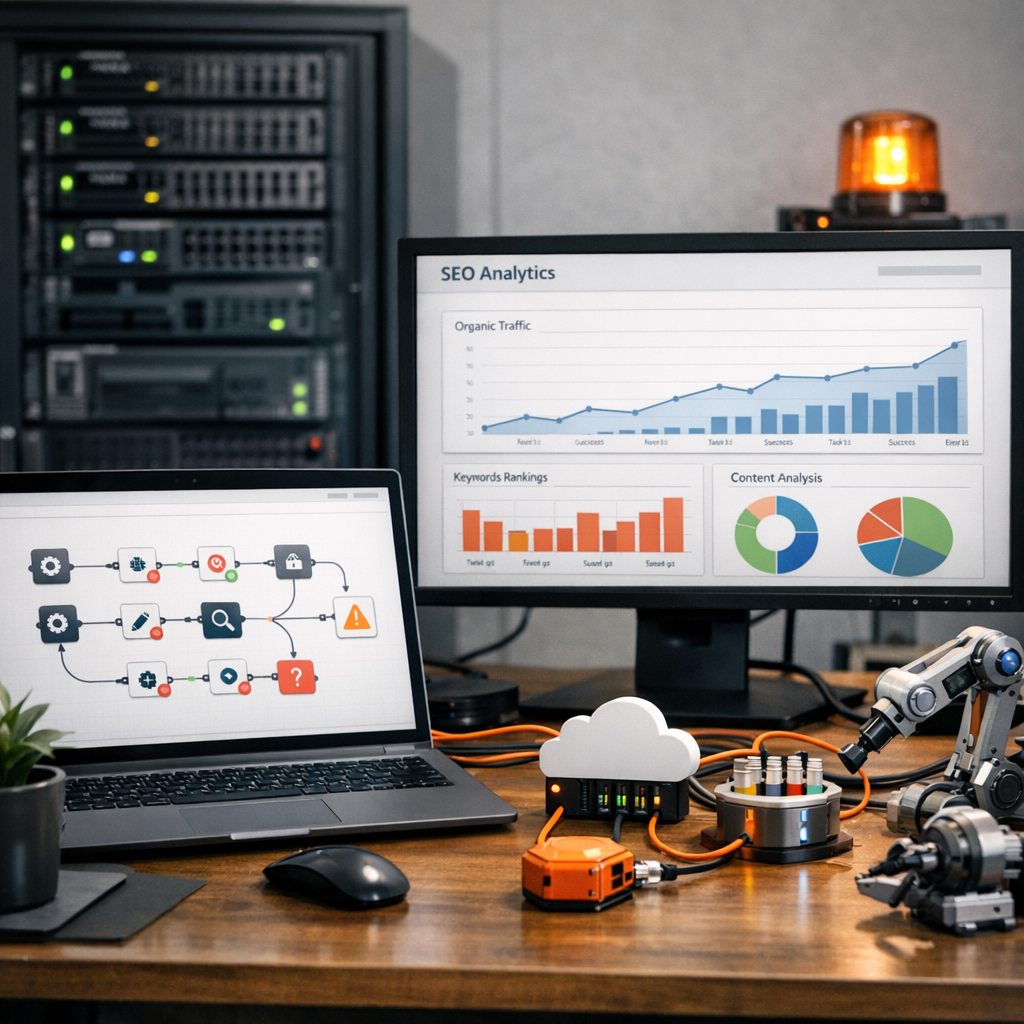
For example, Google’s Core Web Vitals update in 2021 caused widespread ranking fluctuations. Sites with automated pipelines capable of detecting performance bottlenecks and deploying fixes quickly saw reduced impact compared to manual workflows. This highlights the importance of resilience in SEO operations.
The Role of n8n in Workflow Automation
n8n excels as a modular, open-source automation tool that integrates seamlessly with diverse APIs and services. Its node-based architecture allows users to design complex workflows without requiring extensive coding expertise. In the context of SEO, n8n can:
- Automate Data Collection: Pull metrics from tools like Google Search Console, Ahrefs, or SEMrush.
- Trigger AI Decisions: Pass data to ViralMaker’s Autopilot Workers for content analysis and recommendations.
- Monitor Pipeline Health: Detect anomalies such as traffic drops or indexing errors and initiate corrective actions.
Consider a scenario where a blog post’s organic traffic drops by 30% overnight. n8n can trigger an alert, analyze the affected keywords, and pass the data to ViralMaker for AI-driven suggestions on content updates or re-optimization.
ViralMaker Autopilot Workers: Outsourcing Content Decisions to AI
ViralMaker’s Autopilot Workers specialize in dynamic content decision-making. Using advanced natural language processing (NLP) and machine learning models, they evaluate existing content, identify gaps, and recommend actionable improvements.
Key Features of ViralMaker AI
1. Content Scoring: ViralMaker assigns performance scores to articles based on relevance, engagement potential, and SEO alignment.
2. Topic Expansion: It suggests new subtopics or keywords to target based on emerging trends.
3. Automated Tagging: Ensures proper categorization for internal linking and semantic SEO.
For instance, if ViralMaker detects that a category page is underperforming due to thin content, it can recommend adding long-form articles or videos to improve topical authority.
Explore more about ViralMaker’s capabilities here.
Architecting the Pipeline
Step 1: Define Objectives
Begin by identifying the core goals of your pipeline. Are you optimizing for traffic growth, lead generation, or brand visibility? Each objective will shape the workflows and AI configurations.
Step 2: Integrate n8n with SEO Tools
Connect n8n to your preferred SEO tools. For example:
- Google Analytics: Track user behavior and conversion rates.
- Ahrefs: Monitor backlink profiles and keyword rankings.
- ViralMaker: Automate content decisions.
n8n’s flexibility ensures that integrations are straightforward, even for non-technical users.
Step 3: Deploy Autopilot Workers
Activate ViralMaker’s Autopilot Workers to handle content analysis. Configure workflows to pass relevant data (e.g., keyword rankings, engagement metrics) to ViralMaker for processing.
Step 4: Implement Self-Healing Logic
Use n8n’s conditional nodes to build self-healing mechanisms. For example:
- If traffic drops below a threshold, trigger a ViralMaker audit.
- If indexing errors occur, notify your technical SEO team and initiate corrective workflows.
Step 5: Monitor and Iterate
A self-healing pipeline is not static. Regularly review performance metrics and refine workflows to align with evolving SEO trends.
Real-World Performance
Organizations using n8n and ViralMaker have reported significant efficiency gains. According to internal case studies:
- Time Savings: Automating content audits reduced manual workload by 70%.
- Improved Rankings: AI-driven content optimization increased keyword rankings by an average of 15% within three months.
- Error Reduction: Self-healing workflows cut indexing errors by 40%.
These metrics underscore the tangible benefits of investing in automation and AI for SEO.
Pricing and Accessibility
Both n8n and ViralMaker offer scalable pricing models suitable for businesses of all sizes. ViralMaker’s detailed Pricing page outlines options for Autopilot Workers, while n8n’s open-source nature makes it highly cost-effective for early-stage teams.
Challenges and Tradeoffs
While the benefits are clear, implementing a self-healing pipeline is not without challenges:
- Initial Setup Complexity: Configuring workflows requires upfront investment in time and expertise.
- AI Limitations: ViralMaker’s recommendations are only as good as the data it receives. Poor input quality can lead to suboptimal decisions.
- Dependency Risks: Over-reliance on automation may reduce human oversight, potentially missing nuanced opportunities.
Balancing automation with strategic human intervention is key to overcoming these hurdles.
FAQ
For more details on ViralMaker’s services, visit their FAQ.
Final Thoughts
Architecting a self-healing SEO pipeline with n8n and ViralMaker Autopilot Workers is a transformative approach to modern SEO operations. By combining workflow automation with AI-driven content decisions, organizations can achieve greater scalability, resilience, and efficiency.
For SEO strategists looking to future-proof their pipelines, this architecture offers a compelling blend of technical sophistication and practical utility.
Related Links
Field Notes from a Real Implementation
When we ran this workflow in production, the biggest win was not raw article volume but faster recovery from ranking drops.
- We used n8n to detect sudden CTR and indexing anomalies every few hours.
- ViralMaker Autopilot was configured to prioritize refreshes for pages that had dropped more than 15% in impressions.
- We kept one human review checkpoint before publication to avoid generic phrasing.
In practice, this hybrid model (AI decisions + human QA) gave more stable performance than fully manual publishing cycles.
Practical Checklist Before You Go Live
- Define your trigger thresholds (traffic, CTR, indexation).
- Map fallback actions for each failure mode.
- Keep a strict editorial brief so AI outputs remain specific.
- Review 1-2 pilot batches before scaling to all categories.