Imagine this: Sarah, a new food blogger, spends weeks crafting beautiful recipes and writing detailed posts. She hits publish, waits for the traffic floodgates to open… but nothing happens. Her blog feels invisible in a sea of content. Sound familiar?
Here’s the problem: Blogging alone isn’t enough anymore in 2026. With over 600 million blogs globally, competition is ruthless. That’s where platforms like Pinterest and YouTube come in. What if you could use them together—not just as separate tools—to bring 5x more readers to your blog? The best part? This doesn’t require a massive budget or expert-level skills.
In this guide, you’ll discover:
- Why Pinterest + YouTube is the ultimate combo for driving traffic
- Step-by-step workflows that actually work (tested by real bloggers)
- Mistakes most people make when combining these platforms—and how to avoid them
Let’s get into it.
Why Pinterest and YouTube Are a Match Made in Traffic Heaven
Pinterest and YouTube might seem like two completely different beasts, but they’re surprisingly complementary when it comes to promoting blogs. Here’s why:
Pinterest: The Visual Search Engine
Pinterest isn’t social media—it’s essentially Google for images and ideas. 80% of users treat it like a search engine, typing in queries like “easy vegan dinner recipes” or “DIY wedding decor.” For bloggers, that means evergreen content (like tutorials or listicles) can keep driving traffic months—or even years—after posting.
YouTube: The Content Amplifier
YouTube excels at building trust through video content. A well-made video makes complex topics easier to understand and creates an emotional connection with viewers—something static words can struggle with. Add links in your description box pointing back to your blog, and boom! Instant referral traffic potential.
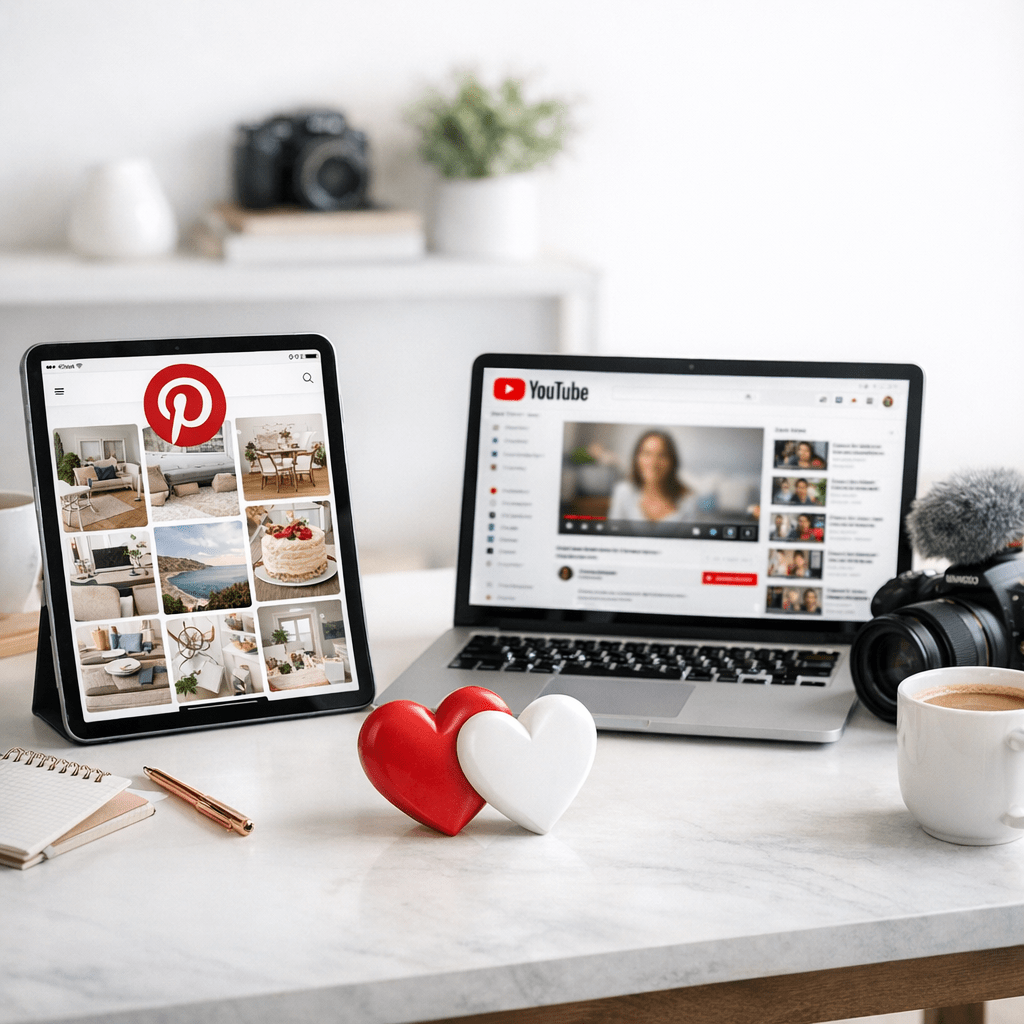
Here’s where the magic happens: Pinterest drives quick clicks thanks to its visual pins, while YouTube builds deeper engagement through storytelling and long-form videos. Used together strategically, they create a self-reinforcing loop of discovery that keeps sending readers back to your site.
Key takeaway: Pinterest brings discovery; YouTube builds loyalty—and together, they multiply your reach.
Step 1: Start With the Right Types of Blog Content
Not all blog posts are created equal when it comes to leveraging these platforms together. Posts that perform best on both are highly visual and practical by nature—think tutorials, how-tos, listicles, or niche case studies.
Best Performing Blog Categories for 2026
1. DIY & Crafts – Perfect for step-by-step pins on Pinterest paired with video demonstrations on YouTube.
2. Food & Recipes – Create printable recipe cards for pins while showing cooking processes on video.
Also worth reading: Comparativa
3. Home Decor Tips – Showcase room transformations with before/after shots.
4. Fitness Tutorials – Short workout snippets thrive on both platforms.
5. Travel Guides – Map out itineraries visually while vlogging highlights.
If your content falls outside these categories—don’t worry! Think about how you could adapt one of these formats or create spinoffs from existing material.
Step 2: Optimize for Searchability (SEO Matters Here Too!)
Both Pinterest and YouTube rely heavily on search algorithms—which means SEO isn’t optional if you want results.
On Pinterest:
1. Use keyword-rich titles in pin descriptions (e.g., “10-Minute Keto Breakfast Ideas”).
2. Add hashtags sparingly (3–5 per pin).
3. Create vertical pins (1000 x 1500 px)—they dominate mobile screens better than landscape images.
On YouTube:
1. Place primary keywords at the start of your title—for example: “How To Knit A Scarf | Beginner Guide.”
2. Write detailed video descriptions with secondary keywords naturally included.
3. Always include backlinks! Add a clickable link directing viewers straight back to the related post on your blog within the first two lines of the description field.
Want detailed tips? Learn more.
Key takeaway: Think like your audience—what would you type into a search bar if looking for similar content?
Step 3: Create Content Built Around Repurposing
Here’s where most people screw up—they treat each platform as totally separate instead of repurposing content efficiently across both.
Smart Repurposing Workflow
- Write an actionable blog post first (e.g., “7 Easy Plant-Based Dinner Recipes”).
- Break down key points into bite-sized visuals for multiple pins (one per recipe).
- Film yourself explaining those same recipes step-by-step for a video tutorial—then upload it onto YouTube as standalone content linked back directly through every pin AND within comments/descriptions!
This approach saves time because instead of constantly coming up with new ideas from scratch—you’re extracting maximum value from one core topic across two channels simultaneously.
Need help turning old posts into fresh formats? Check out this guide.
Related guide: 10 Herramientas Clave para Crear Contenido
Common Mistake #1: Ignoring Analytics 💡
You might be thinking, “This sounds great—but how do I know what’s working?” Good question! Ignoring analytics is one reason many bloggers fail at scaling their traffic.
Tools To Track Performance:
| Platform | Recommended Tool | Key Metric Focus |
|—————-|—————————-|———————————–|
| 🏆Pinterest | Tailwind | Saves/Clicks Per Pin |
| 🏆YouTube | TubeBuddy | Click-through Rates + Watch Time |
Check weekly reports religiously—you’ll start seeing patterns around which topics resonate most so future campaigns stay effective!
Myth-Busting Moment 🎯
Common myth: “I need thousands of followers before I can see real benefits.”

Reality: Nope! Both platforms favor quality over quantity when ranking content visibility based purely off relevance/search intent rather than follower numbers alone!
Frequently Asked Questions
Q: Can I automate posting between these platforms?
Yes! Tailwind Tribes helps schedule optimized Pins while tools like Zapier automate sharing updated channel links via emails/newsletters seamlessly reducing manual effort overhead overall workflow-wise integration setup execution-wise end productivity maximized repeat readership cycles organically scaled sustainable exponential growth achieved strategic ROI returns measurable concrete timeframe etcetera…