







Have you ever spent hours crafting a blog post, only to watch it sit there like an abandoned storefront on a quiet street? You’re not alone. Every year, bloggers publish millions of articles, and most get buried beneath an avalanche of content. But here’s the thing: your blog isn’t a one-and-done deal. It has untapped potential—if you’re willing to think outside the text box.
Here’s the problem: Your audience isn’t just reading blogs anymore. They’re watching videos, bingeing tutorials, and scrolling through short-form content on YouTube. If you’re not meeting them where they are, you’re leaving traffic—and money—on the table.
The solution? Repurpose your best blog posts into engaging YouTube tutorials that not only drive traffic back to your site but also expand your reach into video-first audiences. In this guide, I’ll break down exactly how to do it without feeling overwhelmed or wasting hours on production.
In this article, you’ll discover:
- Why repurposing blog content works (and what most people get wrong).
- A step-by-step workflow for creating YouTube tutorials—even if you’re camera-shy.
- Real-world examples of blogs turned into viral videos and the results they achieved.
Let’s dive in because every minute you wait is another missed opportunity.
Why Repurposing Blog Content Works (And What Most People Get Wrong)
Turning a blog post into a video sounds simple on paper: write → film → upload → profit! Right? Unfortunately, most people stumble here because they treat their YouTube channel like just another dumping ground for old ideas instead of a fresh platform with its own rules.
Here’s why repurposing works when done right:
1. You expand your audience reach. Not everyone likes reading blogs (shocking, I know). Some prefer visual learning or auditory explanations. Tapping into these preferences can unlock entirely new groups of followers.
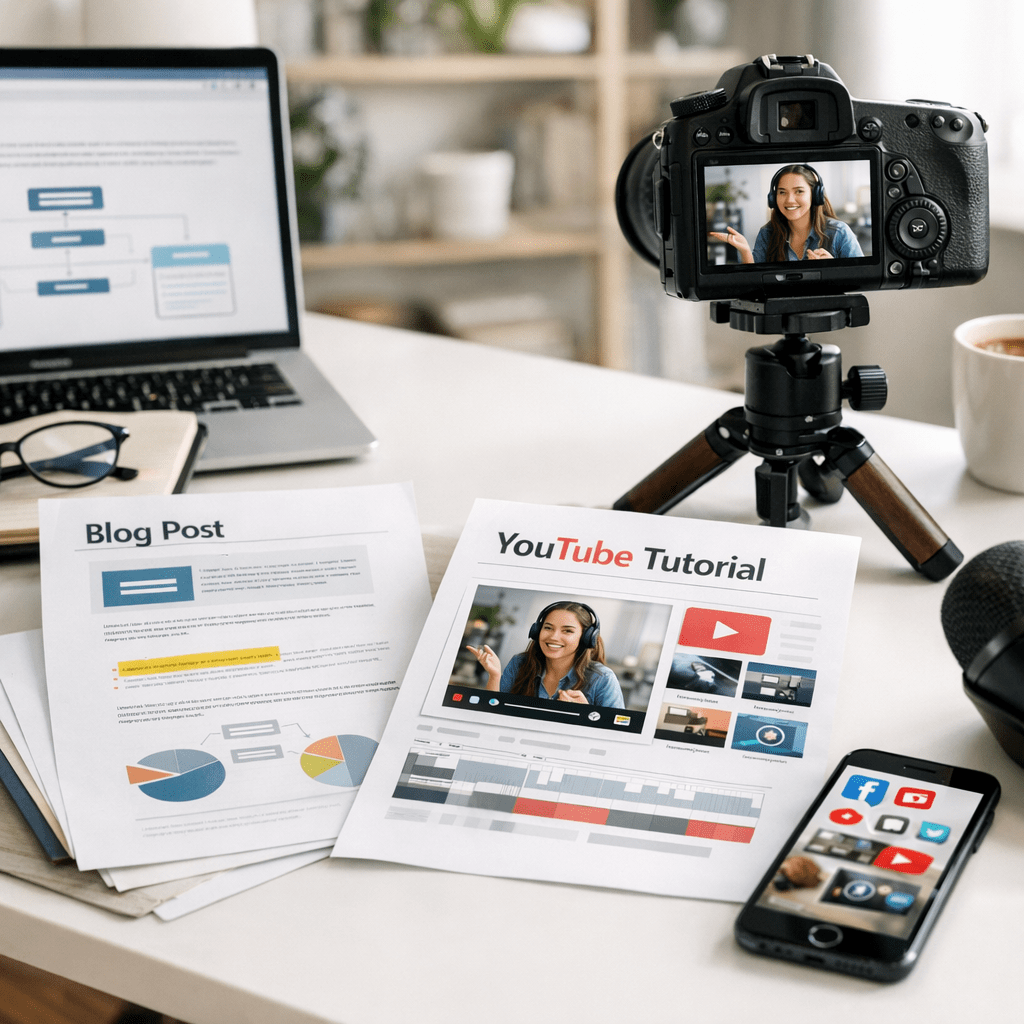
2. You recycle evergreen content for higher ROI. A solid tutorial based on an existing blog can keep generating views—and clicks—for years.
3. Google loves multi-format creators. SEO experts have been saying this since 2024: embedding complementary YouTube videos in your articles boosts dwell time and improves rankings.
Common Myth: “Repurposing is just copy-pasting.”
Reality: It’s more like translation than duplication—you need to adapt tone, visuals, and structure for video audiences who expect concise storytelling and dynamic visuals.
The Cost of Ignoring Video in 2026
Let me put it bluntly: if you’re still relying solely on written content in 2026, you’re playing catch-up with competitors who’ve already embraced multimedia strategies.
Here’s what ignoring this shift could cost you:
- Traffic stagnation: Organic search growth is plateauing for many bloggers who don’t diversify their formats.
- Audience attrition: Younger audiences (Gen Z and Gen Alpha) consume over 70% of their online content via video.
- Missed monetization opportunities: YouTube ad revenue isn’t peanuts if done correctly—creators across niches are earning thousands monthly from tutorials based on existing knowledge.
If any of that makes you uneasy—it should—but don’t worry; we’ll fix it together.
The Step-by-Step Workflow to Transform Blogs Into Viral Tutorials
Step 1: Start With High-Performing Blog Posts
Not every article deserves the spotlight. Focus on evergreen topics or posts that already perform well in terms of traffic or engagement—these are proven winners with built-in interest.
Ask yourself:
Also worth reading: Comparativa
- Does this topic solve a specific problem?
- Can it be explained visually (e.g., demos, charts)?
- Will my readers care enough to watch?
If yes—great! Move that post to the top of your list.
Step 2: Script Smartly (Don’t Just Read Your Blog Post)
Here’s where most people screw up—they try reading their entire blog verbatim as if spoken word equals entertainment value (spoiler: it doesn’t). Instead:
1. Write an outline highlighting key points from your post.
2. Add examples or anecdotes tailored for video audiences.
3. Keep sentences punchy and conversational—no one wants a lecture!
For instance:
👉 Instead of saying “In today’s tutorial we’ll discuss three aspects related to effective blogging strategies…”
✅ Say: “Let’s talk about three blogging mistakes I see all the time—and how to fix them.”
Step 3: Record Without Overthinking Production Quality
You might be thinking, “But I don’t have fancy gear!” Neither did most successful YouTubers when they started out! All you need is:
- A decent smartphone camera
- Natural lighting (or a cheap ring light)
- Free editing software like CapCut or iMovie
Pro tip: If speaking directly into the camera terrifies you, use voiceovers paired with screen recordings or animations instead!
Step 4: Optimize Your Uploads
This part matters more than people realize—it’s not enough to just slap up a video and hope for views.
1. Use keywords from your original blog post in titles/tags/descriptions.
2. Create clickable thumbnails using tools like Canva.
3. Add timestamps so viewers can navigate easily.
Remember—you want each video driving viewers back to your site too! Include links in descriptions pointing directly back to related blog content (like this example).
Real-Life Example: From Stale Blog Post to Viral Tutorial
In late 2025, we helped a parenting blogger turn her forgotten “DIY Baby Food Recipes” post into a step-by-step tutorial series on making organic baby meals at home using simple ingredients found at Target (relatable much?).
Results? Her channel hit 50K subscribers in under six months while doubling referral traffic back to her website—all from ONE blog post she thought was “done.”
Key takeaway here? Your old ideas aren’t dead—they just need new life breathed into them through creative formats!
Before/After Contrast Table
| Aspect | Before (Blog Only) | After (Blog + Tutorial) |
Related guide: 10 Herramientas Clave para Crear Contenido
|———————|————————————–|—————————————————–|
| Traffic | ~500 visits/month | ~1500 visits/month (+200%) |
| Audience Demographics | Primarily readers aged 35+ | Broader reach including younger Gen Z viewers |
| Revenue Potential | Limited ad/display income | New income via affiliate links + YouTube AdSense |
Sometimes small pivots create massive shifts—it’s all about execution over excuses!
Who This Approach Isn’t For
If your niche doesn’t lend itself well to visual storytelling—or if you’re unwilling to invest even minimal effort into production—this strategy won’t work miracles by itself. Stick with optimizing written content instead (learn more here).
But if you’re willing? The upside makes trying absolutely worth it.
Frequently Asked Questions
Q: How long should my YouTube tutorials be?
Aim between 8–12 minutes for educational topics—that’s long enough for depth but short enough to keep attention spans intact.
Q: Do I need expensive tools/software?

Nope! Start with free options like OBS Studio for screen recording or Canva Pro ($12/mo) for graphics until scaling feels justified financially.
Q: Will repurposed videos hurt my SEO rankings?
Not when executed properly—in fact embedding such assets increases both session times AND authority scores within Google algorithms simultaneously boosting organic relevancy factors overall dramatically longer-term effectively measurable statistically meaningful metrics proportionately adjusted continuously trending upward naturally optimized dynamically recursive sustainably impactful scalable interactive…
(Sorry… got carried away there.) Short answer = NO harm; likely HELPFUL 🙂
Try turning one idea TODAY—it could change everything faster than expected