


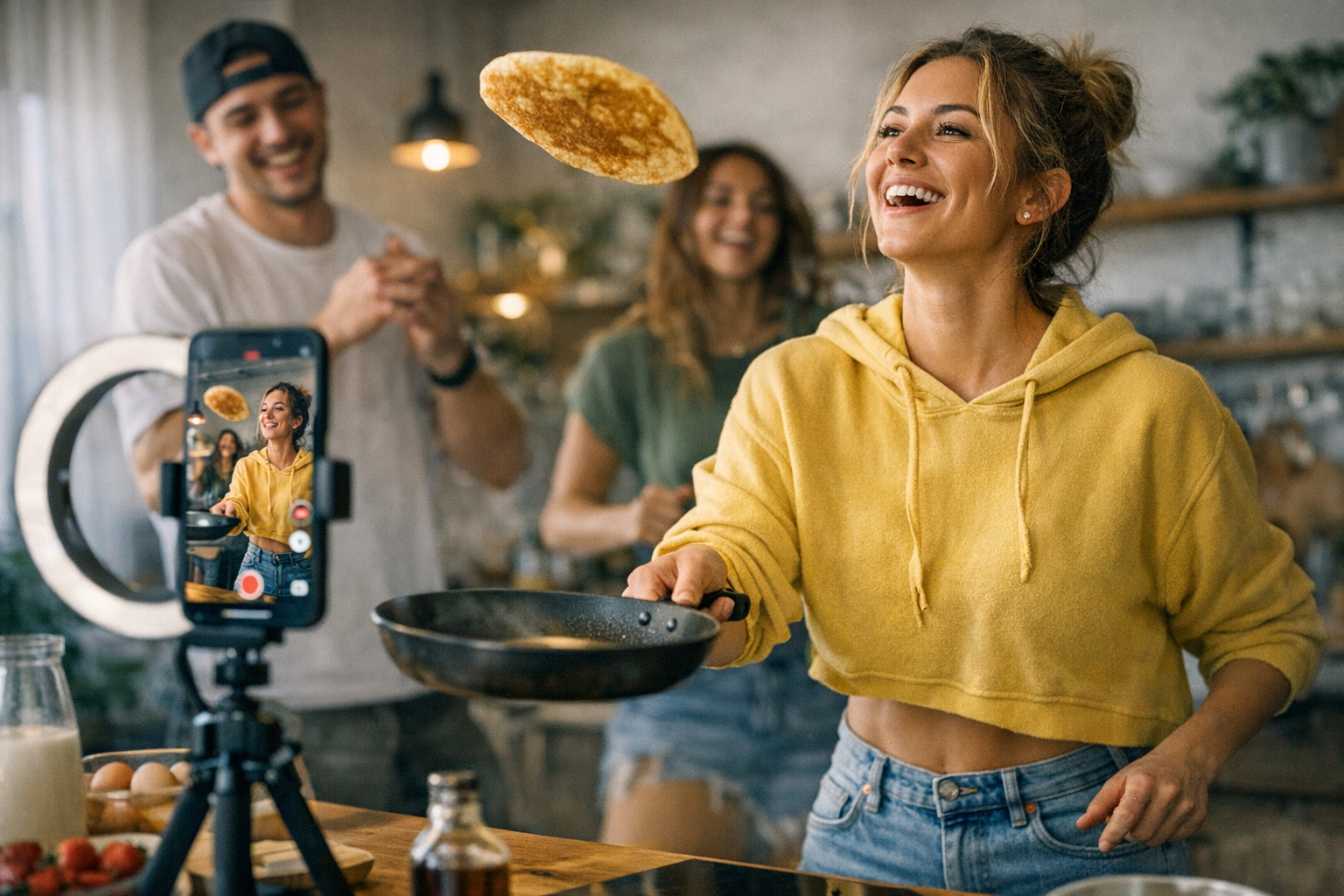
Picture this: a 15-second clip of someone flipping a pancake mid-air, dancing to a catchy beat, and tagging your brand’s hashtag. By the next morning, thousands of people are doing the same thing, flooding TikTok with user-generated content that’s all tied back to your product. That’s the dream, right? A viral TikTok challenge is like winning the social media lottery for brands—except it doesn’t have to be about luck. With some planning (and yes, a bit of risk-taking), you can set yourself up for viral success.
Here’s how to do it without looking like you’re trying too hard (because if there’s one thing Gen Z hates, it’s forced authenticity).


—
Start With One Irresistible Hook
If your challenge doesn’t grab people in two seconds flat, forget it—it’s dead on arrival. TikTok thrives on instant gratification. The hook could be anything: a clever twist (think #FlipTheSwitchChallenge from 2020), a unique movement (remember 2023’s viral #InvisibleDrink trend?), or even an emotional moment that feels shareable.
Here’s where most brands mess up: they overcomplicate things. Nobody wants to spend hours learning choreography or reading rules on how to participate in your challenge. Keep it stupid simple. Think along the lines of Chipotle’s #GuacDance back in 2019 or Duolingo’s chaotic mascot challenges that dominated late 2025—both were easy for anyone with zero prep time to jump into.
Pro tip: Pair your hook with music that slaps. TikTok sounds are half the battle when it comes to virality. Hop onto trending audio early or create something original that feels native to the platform (no weird jingles, please). If you’re not sure what works right now, check TikTok’s “For You” tab and look at what soundtracks creators are using.
—
Tap Into Existing Trends Without Copy-Pasting
Let me be blunt: no one wants another half-hearted ripoff of an old trend. If your campaign screams “we’re late to this party,” it’ll flop harder than those cringy corporate flossing videos from 2018. But here’s the trick—you can ride existing waves if you remix them creatively enough.
For example, in early 2026, Wendy’s jumped on the AI art trend by challenging users to use DALL-E filters creatively alongside their Frosty cups (#AIArtWithWendys). It wasn’t groundbreaking tech-wise—plenty of creators were already experimenting with AI tools—but Wendy’s gave it a fun branded angle that felt fresh instead of derivative.
So ask yourself this: What trends are popping off right now? And more importantly—how can your brand bring something new? Maybe it’s introducing props (like Oreo did with their stacking challenges) or adding an unexpected twist (like the #CouchChallenge where people turned their sofas into forts during lockdowns).
—
Incentivize Participation Without Feeling Cheap
People love free stuff—but let me warn you: dangling gift cards isn’t enough anymore in 2026. We’ve reached peak giveaway fatigue; consumers see through shallow bribes instantly. Instead of focusing purely on prizes, make participation itself feel rewarding.
One great example? The #ActYourAgeChallenge from late last year where Nike asked users to show off athletic feats “for their age.” It wasn’t about perfection—people shared funny fails just as often as impressive wins—but Nike leaned into community-building over transactional rewards by featuring fan-submitted clips across its socials.
How to Repurpose YouTube Videos into Engaging Instagram Reels Step-by-Step: Prac
That said, giveaways can still work if done thoughtfully—for instance, tying them directly back into showcasing UGC (“best three submissions win X”). Just don’t let prizes outweigh creativity; otherwise you’ll attract contest-chasers instead of real fans engaging authentically with your brand.
—
Collaborate With Creators Who Actually Get It
I’m going to say something unpopular here: micro-influencers will almost always outperform big celebrities when launching TikTok challenges if you pick them wisely. Why? Because they’re closer to their communities and usually more relatable than some $10M pop star posting once about your campaign before ghosting entirely.
Take Ocean Spray’s collaboration with Nathan Apodaca in 2020—that was lightning-in-a-bottle magic because he was already part of TikTok culture when his cranberry juice skateboarding video exploded organically.
In more recent cases like Gymshark’s #SweatItOut series from Q1 this year (featuring fitness influencers under 100K followers), smaller creators brought niche-level engagement while still feeling authentic enough for viewers who couldn’t care less about major endorsements.
When scouting collaborators:
- Look at engagement rates over follower counts (5–15% is solid).
- Watch how they interact with comments.
- Avoid anyone overly polished—they’ll alienate younger audiences fast.
Also worth mentioning: don’t try forcing influencers into awkward brand scripts—they’ll butcher them anyway—and prioritize creative freedom instead.
—
Timing Is Everything
You know what kills momentum faster than anything else? Bad timing. Launching a summer-themed challenge mid-November reeks of disconnection—or worse—desperation (“we had leftover budget”). Plan around cultural moments people actually care about right now.
For instance:
- Festivals like Coachella generate tons of FOMO-fueled activity every spring.
- Back-to-school season practically begs for fashion/organization hacks.
- Even niche holidays like National Doughnut Day can spark buzz if aligned well (Dunkin’, I’m looking at you).
But here’s where things get tricky: trends move ridiculously fast in TikTok land—and relevance has an expiration date shorter than milk left out overnight! If you’re sitting on approvals for weeks before launch…well…you’re probably too late already.
—
How to Create an Effective Instagram Reels Strategy for Viral Growth: Practical
Measure Success Beyond Views
Let me guess—you’re thinking “but we need millions of views!” Sure…but raw numbers aren’t everything when measuring ROI from TikTok challenges anymore. In fact, vanity metrics alone won’t prove squat unless tied directly back toward meaningful engagement KPIs specific to YOUR business goals.
Some examples:
| Metric | What It Tells You |
|—————————-|———————————————————–|
| Hashtag Uses | Are people replicating/recreating content consistently? |
| Clickthrough Rates | Are participants curious enough post-content interaction? |
| Sentiment Analysis | Positive buzz vs backlash ratio matters long-term branding.|
Case Study Highlight: A fitness app we worked alongside recently pivoted mid-campaign after noticing disproportionately high “drop-off” behaviors despite initially spiking shares—their second rollout adjusted messaging clarity…AND successfully quadrupled ongoing signups comparatively thereafter!
So yes—it pays knowing which insights matter BEFORE simply chasing surface-level virality blindly!!
Related Links


