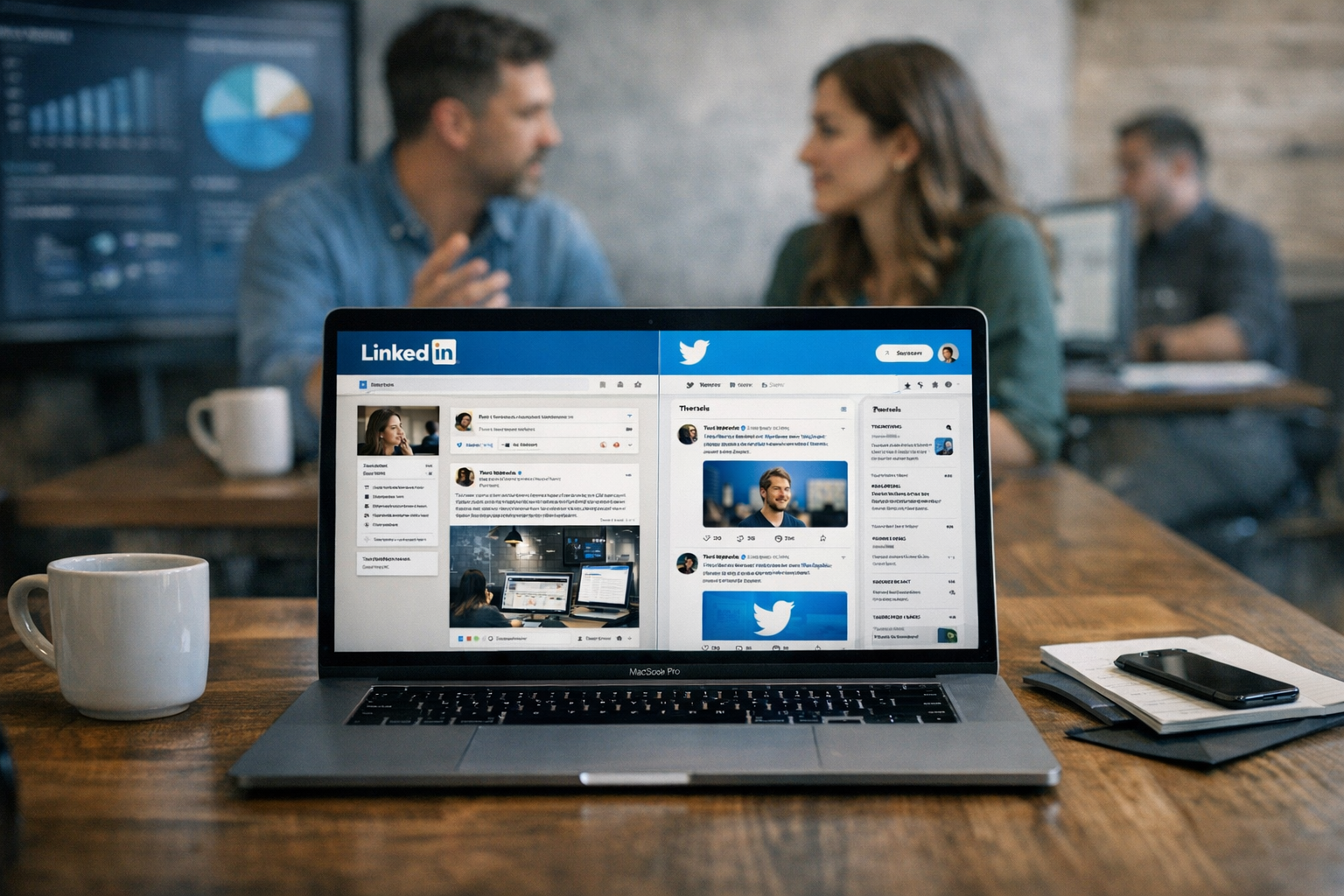
Here’s the thing: if you’re running a B2B brand in 2026, you’ve probably asked yourself this question more than once. Should you be pouring your energy (and budget) into LinkedIn for those polished thought-leadership posts? Or should you aim for the quick hits and viral threads that Twitter still promises?
I’ve been there—testing, watching metrics like a hawk, wondering why one post tanks while another takes off. The answer isn’t as simple as “LinkedIn is for professionals” or “Twitter is where trends happen.” It’s messier than that, and it depends on what kind of “viral growth” you’re chasing.


Let’s break it down.
—
The Case for LinkedIn: Polished and Personal Wins Here
LinkedIn has become the playground for B2B marketers. And no, it’s not just because everyone on there wears a blazer in their profile pic. It’s the platform’s algorithm and culture that make it ideal for professional content to spread like wildfire—if you know how to play it right.
What Works on LinkedIn
First off, LinkedIn favors engagement over raw impressions. That means comments (not just likes) are the holy grail here. When someone comments on your post, their entire network gets exposed to it. This ripple effect is insane if your audience is made up of decision-makers who love sharing “insightful” content to look smart.
For example, I watched a SaaS founder post about his company’s pivot last month—a mix of vulnerability (“we almost failed”) and a clear call-to-action (“here’s how we’re solving this pain point for our clients”). Within 48 hours? Over 12K reactions, 800 comments, and three direct leads closed (he shared these numbers later). That wasn’t luck; that was LinkedIn doing what LinkedIn does best: amplifying personal stories with professional relevance.
Another big win here? Long-form posts work really well. Those chunky updates with storytelling baked into them—how someone overcame an industry hurdle or hit a milestone—get traction in ways they never would on Twitter.
What Doesn’t Work
But here’s where LinkedIn stumbles: speed. If you’re looking for fast virality (think trending hashtags or cultural moments), LinkedIn feels sluggish compared to Twitter. Posts can take hours—or even days—to gain momentum because the algorithm trickles your content out to test its performance before going wide.
Also, let’s not ignore the cringe factor. Not every audience loves the “authenticity theater” happening on LinkedIn these days—the oversharing disguised as professionalism isn’t always relatable or shareable across industries.
—
Twitter: rapidly evolving But Fickle
Now let’s talk about Twitter—and yes, I still call it Twitter even though Elon Musk officially rebranded it to X in late 2023 (#RIPBirdLogo). Whatever name sticks by now doesn’t change what makes this platform tick: speed and wit win here. Period.
What Works on Twitter
Twitter thrives on immediacy. If something happens in your industry at 9 AM (say Google announces some AI breakthrough), by noon there’ll be dozens of viral threads explaining its impact—and yes, those threads will likely outperform any delayed reaction post you’d draft for LinkedIn.
Take Drift’s CMO from earlier this year who live-tweeted her insights during SaaStr Annual 2026 using a thread format (“5 things every SaaS marketer needs to hear from today’s keynote”). Each tweet linked back to an actionable takeaway AND subtly plugged Drift at the end of the thread without feeling salesy. The result? Over 1M impressions in under six hours—and she later revealed they’d onboarded more demo bookings from those tweets than any other channel that week.
23 Affordable Tactics to Amplify Social Media Engagement Without Paid Ads: Pract
Witty one-liners also crush it here when timed right (“Why does every SaaS pricing page feel like a hostage negotiation?” went viral last month with ~40K likes).
Where It Falls Short
But—and this is critical—Twitter’s attention span is brutally short. A killer tweet might go viral today but rarely delivers long-term results unless you capitalize quickly (e.g., driving traffic somewhere meaningful). Without consistent posting or follow-up strategies like retargeting ads, even an epic thread becomes yesterday’s news fast.
Also worth mentioning: Twitter audiences skew broader but less focused compared to LinkedIn’s niche targeting options via groups or job titles. You’ll hit more eyeballs but fewer decision-makers unless you’re hyper-specific with hashtags or follower targeting tools.
—
Quick Comparison Table
Here’s how they stack up across key metrics:
| Feature | LinkedIn | Twitter |
|——————————|—————————————|—————————————|
| Audience Targeting | Precise (job titles, industries) | Broad but less specific |
| Content Lifespan | Days | Minutes/Hours |
| Engagement Style | Comments > Likes | Retweets & Replies |
| Virality Speed | Slower but steady | Lightning-fast |
| Best Content Types | Long-form posts/stories | Threads & bite-sized insights |
| Ease of Trend Participation | Limited | High |
17 Low-Cost Tools to Create Shareable Viral Memes for Social Media: Practical Pl
—
Real-World Examples: Who Won Where?
A bit of perspective always helps clarify things:
1. LinkedIn Win: HubSpot crushed Q1 this year by turning their employee survey data into an infographic series exclusively posted on LinkedIn. Why? Because their audience—CMOs and VPs—live there and love actionable stats tailored directly to them.
2. Twitter Win: Remember when OpenAI announced GPT-5 back in January? Their head scientist dropped a behind-the-scenes thread explaining its capabilities within minutes after launch—it got retweeted over 120K times by developers hungry for details now. That wouldn’t have had nearly the same pop on slower-moving platforms like LinkedIn.
3. Mixed Bag: Last month we tried repurposing a successful TikTok explainer video into both platforms (learn more). On Twitter? The thread got strong initial engagement (~15K views), but faded after two days; meanwhile, the same content reshaped as a SlideShare deck performed steadily better over time on LinkedIn (~60K views total).
—
So… Which Platform Should You Choose?
Honestly? Both have their place—but only if you respect what they’re built for:
- Use LinkedIn when telling deeper stories aimed at professionals who value expertise over entertainment.
- Use Twitter when riding trends or sharing quick-hitting ideas designed for rapid distribution.
If resources are tight, I’d lean toward LinkedIn for sustained B2B growth—it simply converts better over time due to its hyper-targeted user base and comment-driven virality loops (learn more).
But here’s my honest take after years of experimenting: don’t obsess over which platform drives more virality overall; focus instead on which fits your current goals best right now. Viral growth isn’t just about reach—it’s about whether that reach leads anywhere meaningful afterward.
And hey—if all else fails? Test both platforms relentlessly until the numbers tell you exactly where your audience wants you most!
Related Links